Between the green plains of northern Greece and the mighty peaks of Mount Olympus lie traces of a civilization more than 2,300 years old – the world of Alexander the Great, his philosophers, and his kings. Here, in the heart of ancient Macedonia, cities like Pella, Aigai, Dion, and Mieza flourished in the 4th and 3rd centuries BC. These places are nearly as old as the last Pharaohs of Egypt, and were thriving at the same time as China’s first emperors and the early Roman Republic. Around Edessa, history and landscape blend into one — temples, theatres, and royal tombs that still whisper stories of a time when nature, faith, and power were inseparable.
Northern Greece is steeped in history – this is where the ancient Kingdom of Macedonia began, later rising to power under Philip II and Alexander the Great. Around Edessa, you’ll find some of Greece’s most important archaeological sites: places where history still feels alive – in mosaics, tombs, theaters, and landscapes that have endured for thousands of years.From Edessa, it’s easy to visit Pella, Vergina, and Mieza – three remarkable sites that reveal how culture, power, and learning intertwined in ancient Macedonia.
PELLA

Just about 45 minutes east of Edessa lies Pella, the former capital of ancient Macedonia – and the birthplace of Alexander the Great. What is now a quiet plain was, over 2,300 years ago, the political and cultural center of a rising world power.
The archaeological site is extensive: you can stroll through the ruins of the once magnificent city – across its street grid, residential quarters, the Agora (marketplace), a sanctuary, and the remains of villas adorned with elaborate floor mosaics.
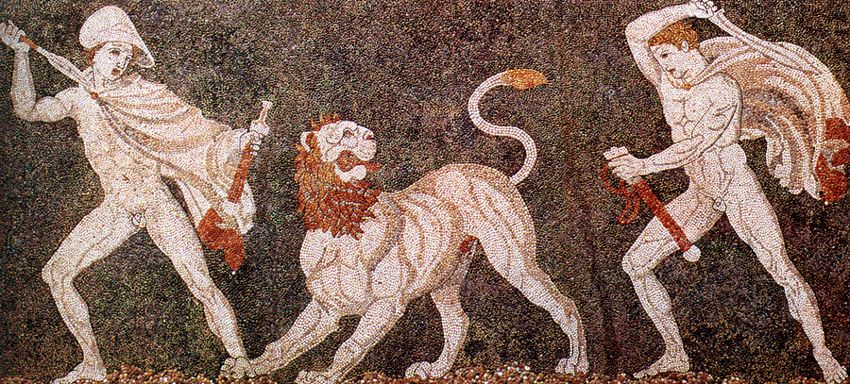
Right next to it is the Archaeological Museum of Pella. Especially impressive are the original pebble mosaics from aristocratic houses, including scenes such as The Amazonomachy (Battle of the Amazons) and The Lion Hunt. The collection is complemented by everyday objects – pottery, jewelry, tools – that bring ancient life in Pella vividly to life.
From the museum, you can look directly out over the excavation site – an ideal combination. Those who explore inside first will see more outside, and those who start outside will better understand what they see inside.
VERGINA
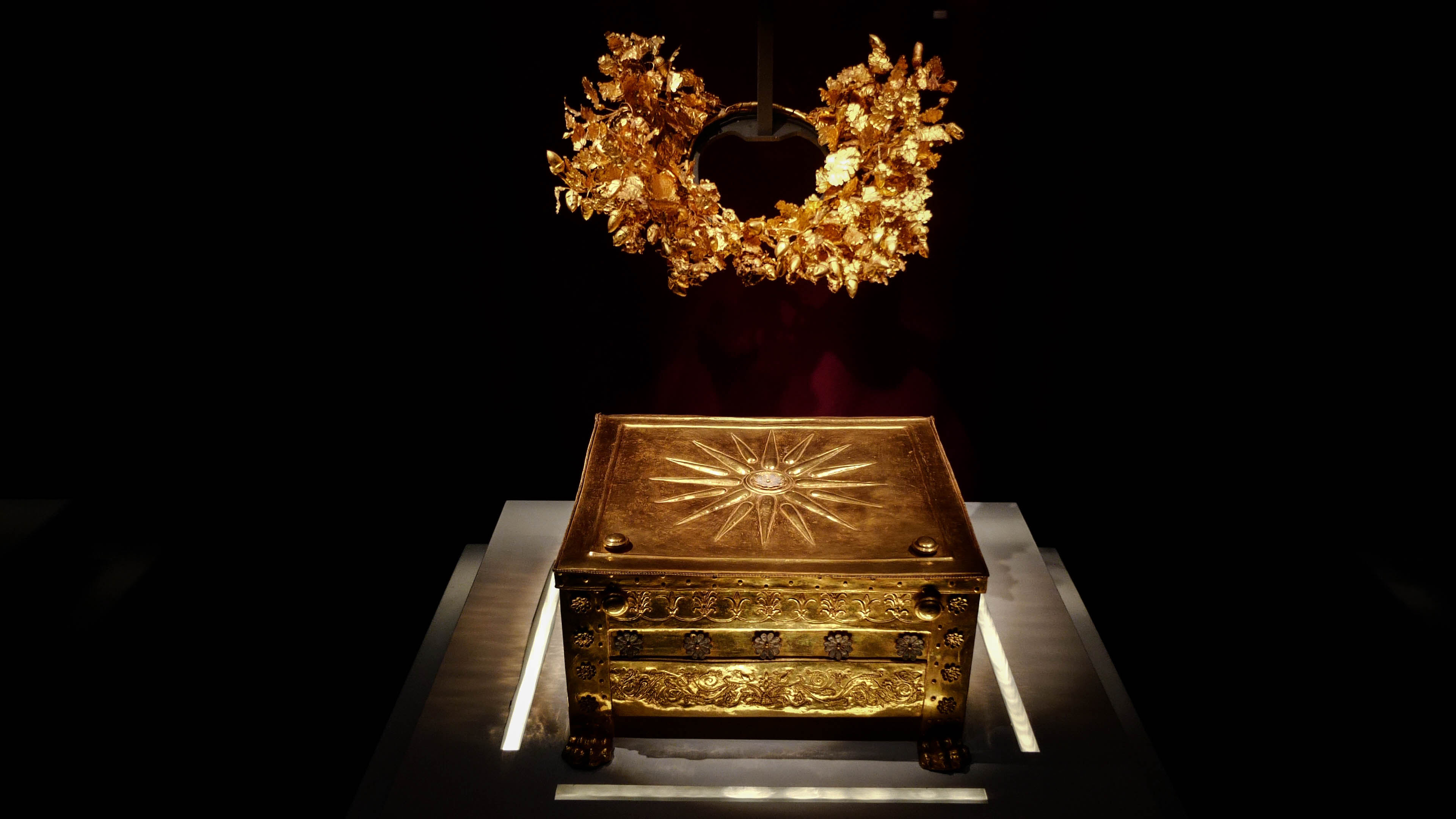
About an hour south of Edessa, and around 50 minutes from Pella, lies Vergina, ancient Aigai – the first capital of Macedonia and former burial site of the Macedonian kings. In 1977, spectacular royal tombs were discovered here, including what is believed to be that of Philip II, the father of Alexander the Great.
The traditionally underground Museum of the Royal Tombs is extraordinary: in dim light, you walk directly past the original graves and see the golden burial treasures right where they were found.
Since December 2022, the Polycentric Museum of Aigai has also been open to visitors. This modern museum complex connects the Tomb Museum with a central exhibition building and several additional galleries that shed light on the life, art, and power structures of the Macedonian royal court. The main building serves as a symbolic gateway to the archaeological site and integrates multimedia presentations with ancient artifacts.
MIEZA
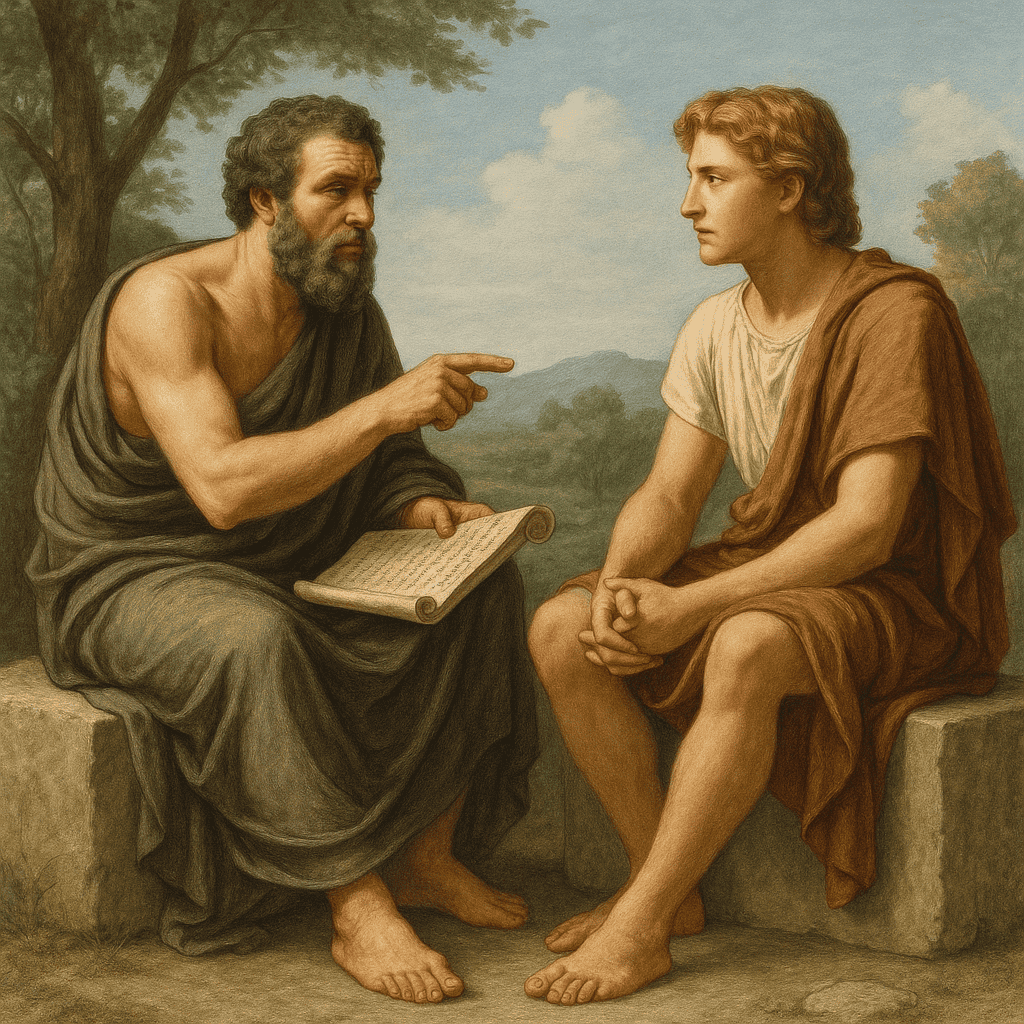
Near Naoussa, about 35 minutes from Edessa, lies Mieza, the legendary place where Aristotle taught the young Alexander the Great. Here, in the so-called Nymphaion of Mieza – a sanctuary of the nymphs with rock niches and springs – learning intertwined with nature and philosophy. The atmosphere remains calm and green to this day, just as it was described in accounts of Aristotle’s teaching.
The archaeological site also includes the remains of the ancient theater of Mieza, once part of the small city. It sits peacefully in the landscape and can be freely explored.
Only a few kilometers further, near Lefkadia, lies the Macedonian necropolis with several impressive tombs from the 3rd century BC. Especially notable are the Tomb of Judgement (Tafos tis Kriseos) with its figural wall paintings, the Tomb of the Palmettes (Tafos ton Anthemion) with rich ornamentation, and the Tomb of Lyson and Kallikles, whose painted walls are astonishingly well preserved.
These tombs rank among the finest examples of Macedonian funerary architecture and can be visited as part of the archaeological site. The area of Mieza and Lefkadia is one of the cultural and historical highlights of the region – yet it remains a quiet, almost meditative place, far from the crowds.
OLYMPUS
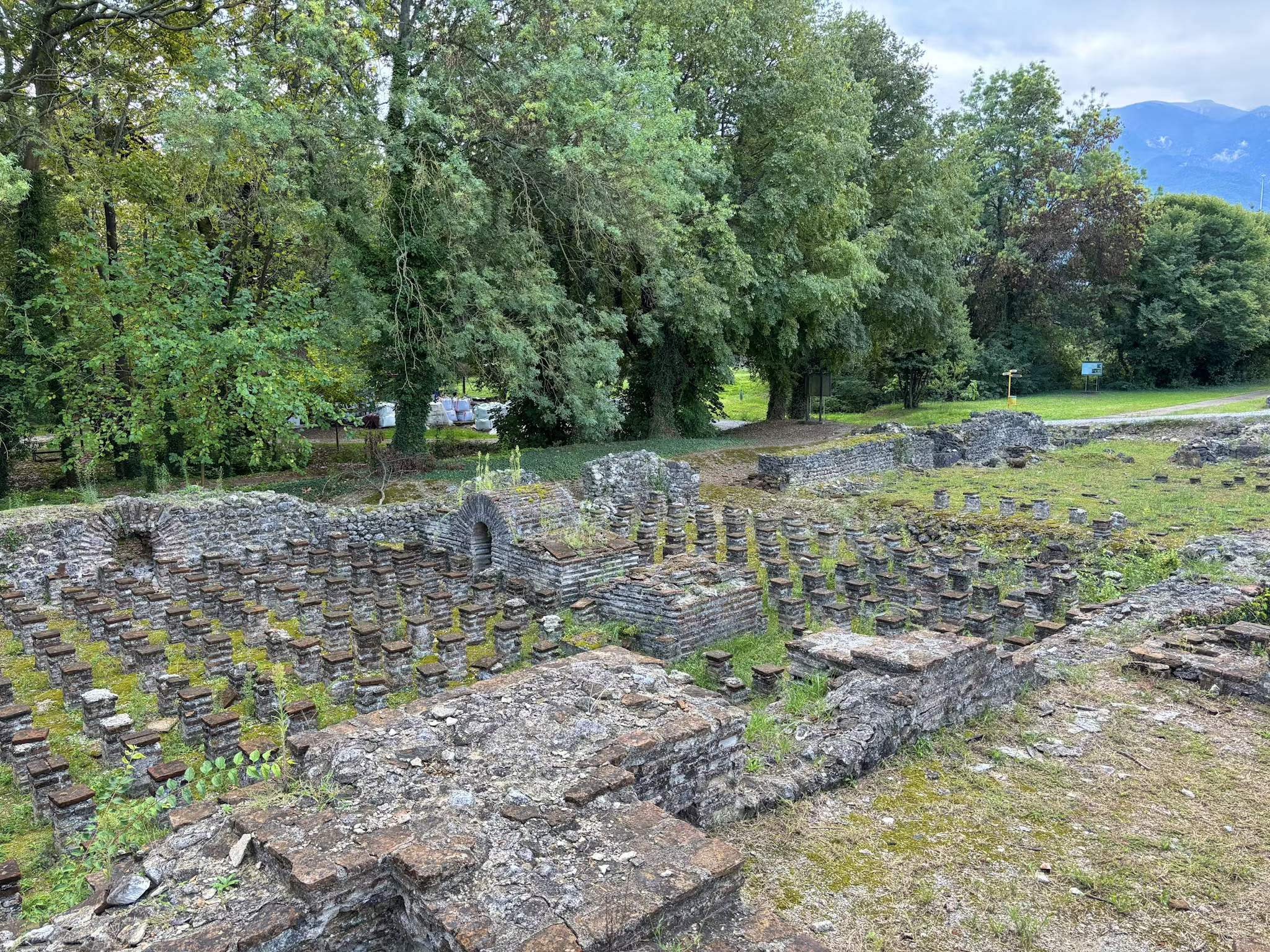
Anyone who enjoys a mix of ancient history and nature should take a day trip to Dion, at the foot of Mount Olympus (about 2 hours from Edessa). The city was the religious center of the Macedonians – Alexander the Great offered sacrifices here before his campaign against Persia.
The archaeological site is spacious and lush: temples, theaters, baths, and streets – all set among meadows and streams. There’s also a small but fascinating museum featuring statues and everyday artifacts.
Those who still have energy afterwards can continue with a hike in Olympus National Park or simply enjoy the view of Greece’s highest mountain.
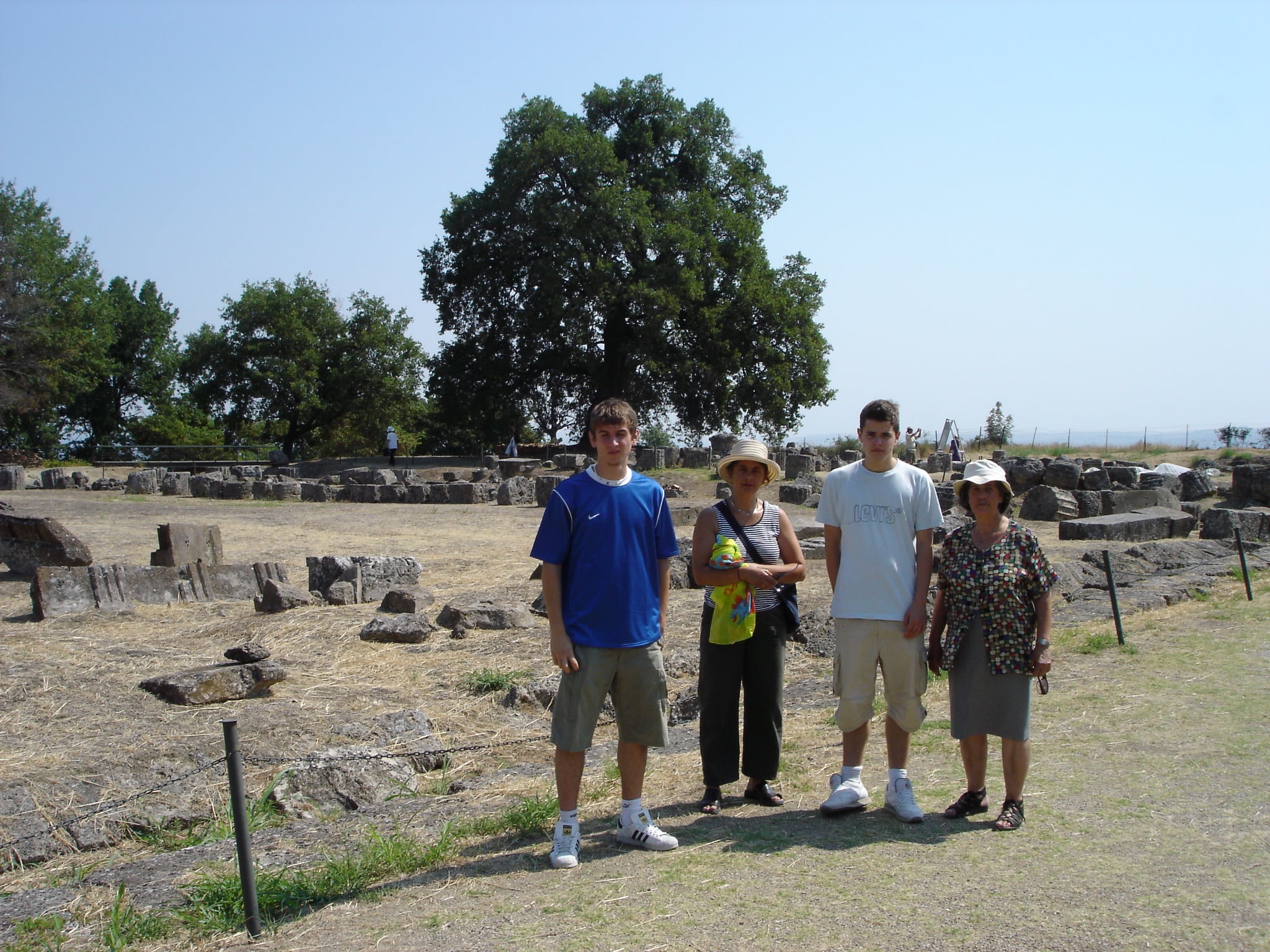
Vergina/Pella 2004

University Excursion 2009

Vergina/Pella 2004
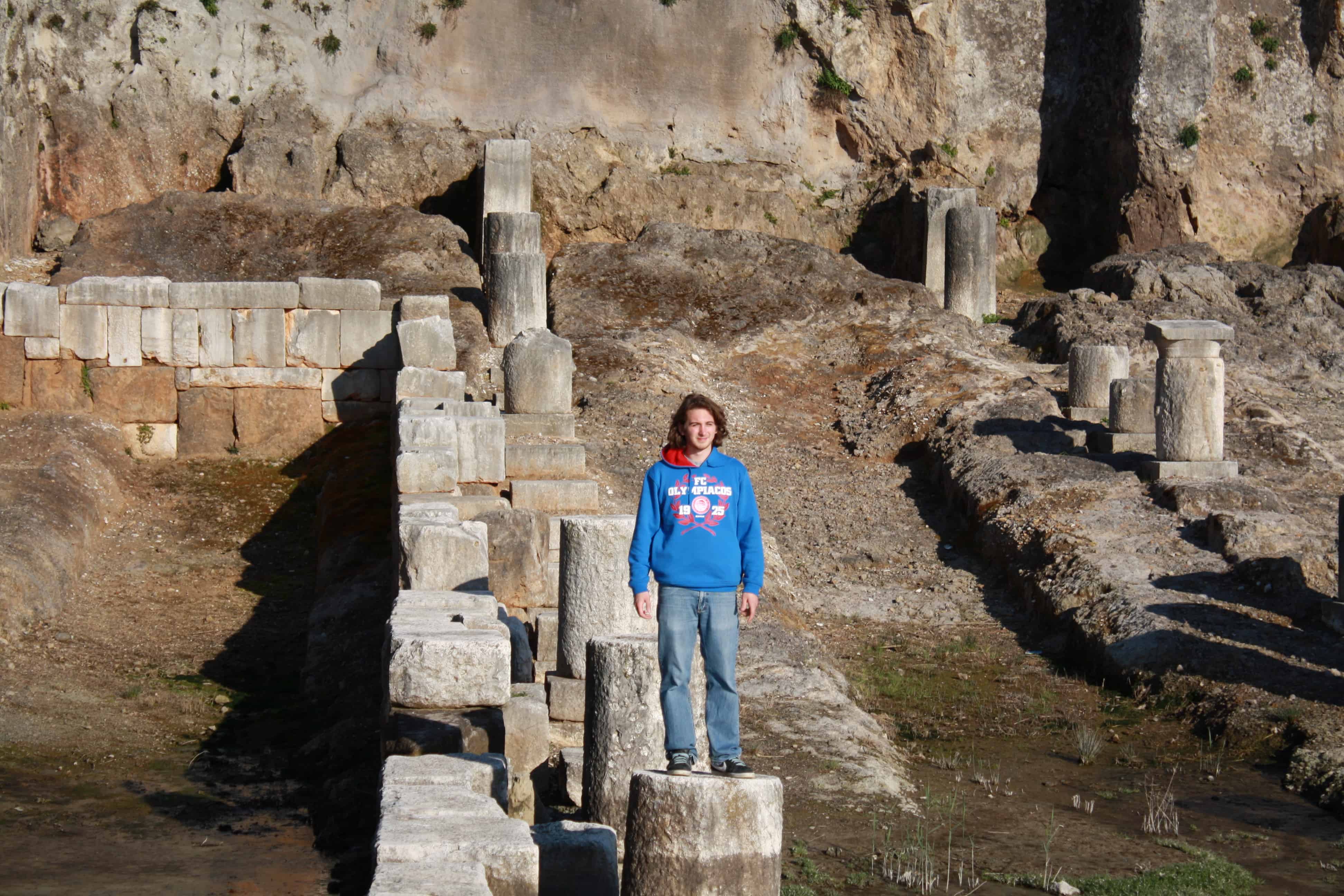
University Excursion 2009